Picture 1 of 1
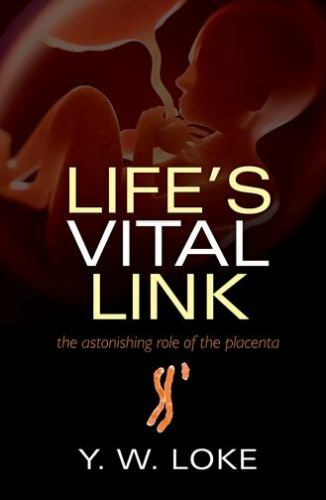
Stock photo

Picture 1 of 1
Stock photo
Life's Vital Link : The Astonishing Role of the Placenta by Y. W. Loke (2018, Trade Paperback)

Rarewaves (695531)
98.9% positive feedback
Price:
US $24.91
(inclusive of GST)
ApproximatelyS$ 32.29
+ $4.35 shipping
Returns:
60 days return. Buyer pays for return shipping. If you use an eBay shipping label, it will be deducted from your refund amount.
Condition:
Oops! Looks like we're having trouble connecting to our server.
Refresh your browser window to try again.
About this product
Product Identifiers
PublisherOxford University Press, Incorporated
ISBN-100199694524
ISBN-139780199694525
eBay Product ID (ePID)242899289
Product Key Features
Number of Pages276 Pages
LanguageEnglish
Publication NameLife's Vital Link : the Astonishing Role of the Placenta
Publication Year2018
SubjectLife Sciences / Biology, Perinatology & Neonatology
TypeTextbook
AuthorY. W. Loke
Subject AreaScience, Medical
FormatTrade Paperback
Dimensions
Item Height0.7 in
Item Weight7.5 Oz
Item Length7.7 in
Item Width5.1 in
Additional Product Features
Intended AudienceTrade
LCCN2013-427806
ReviewsA surprisingly delightful book. Accessible enough for a general readership, Loke's work provides the key to a truly unique world.
Dewey Edition23
IllustratedYes
Dewey Decimal612.63
Table Of Content1. After the Afterbirth2. In the Beginning3. The Principal Players4. Parental Tug-o-War5. Connecting with Mother6. Nature's Transplant7. Products8. Gateway9. Journey's EndGlossaryEndnotesIndex
SynopsisThe development of the placenta was a pivotal event in evolution. Without it, we would still be laying eggs instead of giving birth to live offspring. It represents the critical link between the foetus and the mother, but its character is extraordinary -- it is, in effect, a foreign tissue that invades the mother's body. Compared to many other animals, the human placenta represents a particularly aggressive body. But how is it managed and controlled? How did such an organ evolve in the first place? And why is it tolerated by the mother? Y.W. Loke explores the nature of the placenta and what it can tell us about evolution, development, and genetics., How is it possible that a party foreign body can invade your tissues, avoiding attack by your immune system, establish access to your bloodstream, and even influence your brain? Even one of us has benefited from just such a parasite, and every mother has experienced it. Because that parasite is the placenta. One of the most ingenious adaptations, the mammalian placenta is the result of 300 million years of evolution. Its cunning ways of growing-cancer like, yet controlled-and camouflaging itself against the defence systems of the host are only just being worked out. This is the story of an astonishing and unique organ, which allows us to grow towards individuality, but also ensures that we are never completely separate: we all carry a tiny bit of Mother within us. Book jacket., The development of the placenta was a pivotal event in evolution. Without it, we would still be laying eggs instead of giving birth to live offspring. It represents the critical link between the foetus and the mother, but its character is extraordinary - it is, in effect, a foreign tissue that invades the mother's body. Compared to many other animals, the human placenta represents a particularly aggressive body. But how is it managed and controlled? How did such an organ evolve in the first place? And why is it tolerated by the mother? Y.W. Loke explores the nature of the placenta and what it can tell us about evolution, development, and genetics., How does the foetus - a foreign body - survive inside the mother? The placenta is the extraordinary organ that allows this to happen; but this remarkable feat of evolution is only just being fully appreciated by science. Y.W. Loke explores the fascinating nature of the placenta and what it can tell us about evolution, development, and genetics.
LC Classification NumberQP281
All listings for this product


Be the first to write a review


