Picture 1 of 1
Stock photo

Picture 1 of 1
Stock photo
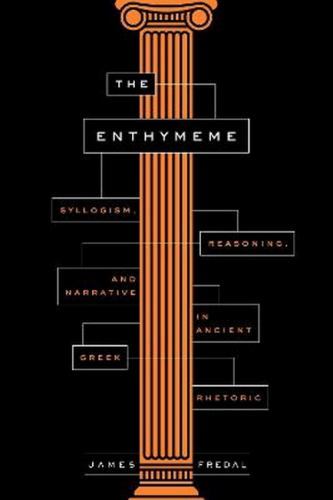
Enthymeme : Syllogism, Reasoning, and Narrative in Ancient Greek Rhetoric by James Fredal (2022, Trade Paperback)

Great Book Prices Store (364431)
98.1% positive feedback
Price:
US $53.90
(inclusive of GST)
ApproximatelyS$ 69.86
+ $27.24 shipping
Returns:
No returns, but backed by .
Condition:
Oops! Looks like we're having trouble connecting to our server.
Refresh your browser window to try again.
About this product
Product Identifiers
PublisherPennsylvania STATE University Press
ISBN-100271086149
ISBN-139780271086149
eBay Product ID (ePID)23057249919
Product Key Features
Number of Pages226 Pages
LanguageEnglish
Publication NameEnthymeme : Syllogism, Reasoning, and Narrative in Ancient Greek Rhetoric
Publication Year2022
SubjectCommunication Studies, Ancient / Greece, Rhetoric, Logic
TypeTextbook
AuthorJames Fredal
Subject AreaPhilosophy, Language Arts & Disciplines, History
FormatTrade Paperback
Dimensions
Item Height0.7 in
Item Weight12 Oz
Item Length9 in
Item Width6 in
Additional Product Features
Intended AudienceScholarly & Professional
Reviews"James Fredal challenges traditional Aristotelian interpretations of the enthymeme as an abstract theoretical concept by examining 'enthymizing' as a situational activity occurring within rhetorical narratives of Greek oratory. A provocative and insightful study that compels readers to reconsider long-accepted notions of Hellenic rhetorical theory." --Richard Leo Enos, author of Greek Rhetoric Before Aristotle, "The volume offers a valuable account of a key element of Greek rhetorical practice and serves as a worthy reminder of the importance of the insights of the Greeks for our own theory of narrative and vice versa. It invites us to revisit difficult and unresolved issues of the relationships that hold among narrative, rhetorical speech and logic, and how they were regarded in antiquity." --Owen Goldin Classical Review, "James Fredal challenges traditional Aristotelian interpretations of the enthymeme as an abstract theoretical concept by examining 'enthymizing' as a situational activity occurring within rhetorical narratives of Greek oratory. A provocative and insightful study that compels readers to reconsider long-accepted notions of Hellenic rhetorical theory." --Richard Leo Enos,author of Greek Rhetoric Before Aristotle, "Fredal's interdisciplinary approach is impressive, demonstrating currency in fields such as classical rhetoric, formal logic, and legal theory; his treatment of Aristotle--his argument that terms such as syllogism have a general sense rather than the technical sense they acquired later--resonates with contemporary philology." --P. E. Ojennus Choice, "James Fredal challenges traditional Aristotelian interpretations of the enthymeme as an abstract theoretical concept by examining 'enthymizing' as a situational activity occurring within rhetorical narratives of Greek oratory. A provocative and insightful study that compels readers to reconsider long-accepted notions of Hellenic rhetorical theory." -Richard Leo Enos, author of Greek Rhetoric Before Aristotle "Fredal's interdisciplinary approach is impressive, demonstrating currency in fields such as classical rhetoric, formal logic, and legal theory; his treatment of Aristotle-his argument that terms such as syllogism have a general sense rather than the technical sense they acquired later-resonates with contemporary philology." -P. E. Ojennus, Choice, "The volume offers a valuable account of a key element of Greek rhetorical practice and serves as a worthy reminder of the importance of the insights of the Greeks for our own theory of narrative and vice versa. It invites us to revisit difficult and unresolved issues of the relationships that hold among narrative, rhetorical speech and logic, and how they were regarded in antiquity." --Owen Goldin, Classical Review, "Fredal's interdisciplinary approach is impressive, demonstrating currency in fields such as classical rhetoric, formal logic, and legal theory; his treatment of Aristotle--his argument that terms such as syllogism have a general sense rather than the technical sense they acquired later--resonates with contemporary philology." --P. E. Ojennus, Choice
Dewey Edition23
TitleLeadingThe
IllustratedYes
Dewey Decimal808.00938
Table Of ContentIntroduction Part One 3.0 1. Enthymeme 3.0: The Truncated Syllogism 2. 3.0 and Its Problems Part Two 2.0 3. Aristotle, Sullogismos, and 2.0 4. 2.0 and Its Problems Part Three 1.0 5. Enthymizing in the Orators 6. Oratorical Enthymizing in Context 7. Enthymizing and Adversarial Narratives Part Four Lysias and the Enthymeme 8. Enthymizing in Lysias 1, On the Death of Eratosthenes 9. A Many-Layered Tale Conclusion Notes References Index
SynopsisCentral to rhetorical theory, the enthymeme is most often defined as a truncated syllogism. Suppressing a premise that the audience already knows, this rhetorical device relies on the audience to fill in the missing information, thereby making the argument more persuasive. James Fredal argues that this view of the enthymeme is wrong. Presenting a new exegesis of Aristotle and classic texts of Attic oratory, Fredal shows that the standard reading of Aristotle's enthymeme is inaccurate-and that Aristotle himself distorts what enthymemes are and how they work. From close analysis of the Rhetoric, Topics, and Analytics, Fredal finds that Aristotle's enthymeme is, in fact, not syllogistic and is different from the enthymeme as it was used by Attic orators such as Lysias and Isaeus. Fredal argues that the enthymeme, as it was originally understood and used, is a technique of storytelling, primarily forensic storytelling, aimed at eliciting from the audience an inference about a narrative. According to Fredal, narrative rather than formal logic is the seedbed of the enthymeme and of rhetoric more broadly. The Enthymeme reassesses a fundamental doctrine of rhetorical instruction, clarifies the viewpoints of the tradition, and presents a new form of rhetoric for further study and use. This groundbreaking book will be welcomed by scholars and students of classical rhetoric, the history of rhetoric, and rhetorical theory as well as communications studies, classical studies, and classical philosophy., Examines the concept of the enthymeme in ancient Greek rhetoric, arguing that it is a technique of storytelling aimed at eliciting from the audience an inference about a narrative., Central to rhetorical theory, the enthymeme is most often defined as a truncated syllogism. Suppressing a premise that the audience already knows, this rhetorical device relies on the audience to fill in the missing information, thereby making the argument more persuasive. James Fredal argues that this view of the enthymeme is wrong. Presenting a new exegesis of Aristotle and classic texts of Attic oratory, Fredal shows that the standard reading of Aristotle's enthymeme is inaccurate--and that Aristotle himself distorts what enthymemes are and how they work. From close analysis of the Rhetoric , Topics , and Analytics , Fredal finds that Aristotle's enthymeme is, in fact, not syllogistic and is different from the enthymeme as it was used by Attic orators such as Lysias and Isaeus. Fredal argues that the enthymeme, as it was originally understood and used, is a technique of storytelling, primarily forensic storytelling, aimed at eliciting from the audience an inference about a narrative. According to Fredal, narrative rather than formal logic is the seedbed of the enthymeme and of rhetoric more broadly. The Enthymeme reassesses a fundamental doctrine of rhetorical instruction, clarifies the viewpoints of the tradition, and presents a new form of rhetoric for further study and use. This groundbreaking book will be welcomed by scholars and students of classical rhetoric, the history of rhetoric, and rhetorical theory as well as communications studies, classical studies, and classical philosophy.
LC Classification NumberBC185.F74 2022
All listings for this product


Be the first to write a review