Picture 1 of 1
Stock photo

Picture 1 of 1
Stock photo
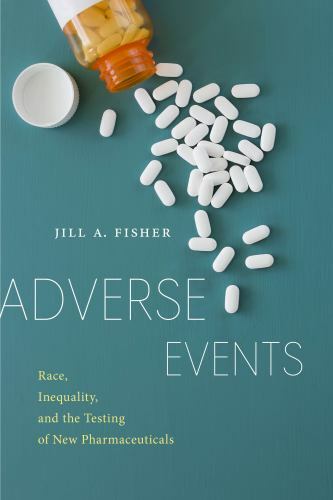
Anthropologies of American Medicine: Culture, Power, and Practice Ser.: Adverse Events : Race, Inequality, and the Testing of New Pharmaceuticals by Jill A. Fisher (2020, Trade Paperback)

Great Book Prices Store (364475)
98.1% positive feedback
Price:
US $48.91
(inclusive of GST)
ApproximatelyS$ 63.39
+ $27.24 shipping
Returns:
No returns, but backed by .
Condition:
Oops! Looks like we're having trouble connecting to our server.
Refresh your browser window to try again.
About this product
Product Identifiers
PublisherNew York University Press
ISBN-101479862169
ISBN-139781479862160
eBay Product ID (ePID)5038752983
Product Key Features
Number of Pages250 Pages
LanguageEnglish
Publication NameAdverse events : Race, Inequality, and the Testing of New Pharmaceuticals
Publication Year2020
SubjectSociology / General, Anthropology / General
TypeTextbook
AuthorJill A. Fisher
Subject AreaSocial Science
SeriesAnthropologies of American Medicine: Culture, Power, and Practice Ser.
FormatTrade Paperback
Dimensions
Item Height0.7 in
Item Weight16.4 Oz
Item Length9 in
Item Width6 in
Additional Product Features
Intended AudienceScholarly & Professional
LCCN2019-039473
Reviews"Jill Fisher invites the reader into a sustained and systematic analysis of how pharmaceutical companies operate their Phase I drug trials and the symbiotic relationship between drug development and what she calls a "profound economic insecurity" on the part of the participants ... It is an important book for understanding broader sociological concepts of inequality, stigma, and pharmaceutical development.", Leaves a striking impression on the reader ... Likely to be of interest to a broad audience. It is suitable for lay people who have an interest in exploring a largely unseen side of the pharmaceutical industry, people working in pharmaceuticals who wish to scrutinize the ins-and-outs of their industry, as well as students and academics such as bioethicists, sociologists, and those studying race and ethnicity, Adverse Events damns the industry with simple description, but Fisher's analysis has a bigger concern. The industry is a symptom of the American problem of racist capitalism, and in the book, Fisher documents how a racist, wildly unequal economy leads people who are already in precarious positions to take part in first-in-human trials. Ten years ago, when she started her research, she could hardly have predicted its immediacy., Adverse Events damns the industry with simple description, but Fisher's analysis has a bigger concern. The industry is a symptom of the American problem of racist capitalism, and in the book, Fisher documents how a racist, wildly unequal economy leads people who are already in precarious positions to take part in first-in-human trials. Ten years ago, when she started her research, she could hardly have predicted its immediacy., This book presents weighty implications relative to current US economic and employment arrangements ... a helpful reference in courses on bioethics, biomedical research methods, social justice, gender and race/ethnicity, intersectionality studies, and the sociology of science., A mesmerizing ethnographic study that shows the safety of the pharmaceuticals we swallow depends on an invisible army of volunteers putting their bodies at risk for a quick dollar., Jill Fisher has provided the most thorough examination [of Phase I trials] yet ... the world that Fisher reveals in Adverse Events is unsettling., May become a scholarly classic, change how the drugs we take are tested, and save billions in misleading trials that are not necessary., One of the best books of medical sociology I have ever read. Fisher describes the world of paid research subjects with remarkable insight and compassion. . . . Nothing short of brilliant., Adverse Events reveals the many and varied ways in which social inequalities--particularly class and race--compel individuals to become healthy volunteers for Phase I trials, despite the risks involved ... This is a text that can--and should--reach audiences beyond academia., Offers an unflinching view of the inequities built in to the twenty-first-century clinical-trials industry. . . . Has as much to say about the micropolitics of stigma and adversity as it does about the macrostructures of health and capitalism today.
Series Volume Number9
IllustratedYes
SynopsisAdverse Events explores the connections between race, inequality, and the testing of new pharmaceuticals--, Explores the social inequality of clinical drug testing and its effects on scientific results Imagine that you volunteer for the clinical trial of an experimental drug. The only direct benefit of participating is that you will receive up to $5,175. You must spend twenty nights literally locked in a research facility. You will be told what to eat, when to eat, and when to sleep. You will share a bedroom with several strangers. Who are you, and why would you choose to take part in this kind of study? This book explores the hidden world of pharmaceutical testing on healthy volunteers. Drawing on two years of fieldwork in clinics across the country and 268 interviews with participants and staff, it illustrates how decisions to take part in such studies are often influenced by poverty and lack of employment opportunities. It shows that healthy participants are typically recruited from African American and Latino/a communities, and that they are often serial participants, who obtain a significant portion of their income from these trials. This book reveals not only how social inequality fundamentally shapes these drug trials, but it also depicts the important validity concerns inherent in this mode of testing new pharmaceuticals. These highly controlled studies bear little resemblance to real-world conditions, and everyone involved is incentivized to game the system, ultimately making new drugs appear safer than they really are. Adverse Events provides an unprecedented view of the intersection of racial inequalities with pharmaceutical testing, signaling the dangers of this research enterprise to both social justice and public health., Winner, 2022 Donald W. Light Award for Applied Medical Sociology, given by the Medical Sociology Section of the American Sociological Association Winner, 2021 Robert K. Merton Book Award, given by the Science, Knowledge, and Technology Section of the American Sociological Association 2021 Outstanding Academic Title, Choice Magazine Explores the social inequality of clinical drug testing and its effects on scientific results Imagine that you volunteer for the clinical trial of an experimental drug. The only direct benefit of participating is that you will receive up to $5,175. You must spend twenty nights literally locked in a research facility. You will be told what to eat, when to eat, and when to sleep. You will share a bedroom with several strangers. Who are you, and why would you choose to take part in this kind of study? This book explores the hidden world of pharmaceutical testing on healthy volunteers. Drawing on two years of fieldwork in clinics across the country and 268 interviews with participants and staff, it illustrates how decisions to take part in such studies are often influenced by poverty and lack of employment opportunities. It shows that healthy participants are typically recruited from African American and Latino/a communities, and that they are often serial participants, who obtain a significant portion of their income from these trials. This book reveals not only how social inequality fundamentally shapes these drug trials, but it also depicts the important validity concerns inherent in this mode of testing new pharmaceuticals. These highly controlled studies bear little resemblance to real-world conditions, and everyone involved is incentivized to game the system, ultimately making new drugs appear safer than they really are. Adverse Events provides an unprecedented view of the intersection of racial inequalities with pharmaceutical testing, signaling the dangers of this research enterprise to both social justice and public health., Explores the social inequality of clinical drug testing and its effects on scientific results Imagine that you are testing the safety and efficacy of an experimental drug in what is called a Phase I trial. The only direct benefit to you of participating is that you will receive up to $5,175 for completing the study. If you choose to enroll, you must spend twenty consecutive nights literally locked in a research facility. You will be told what to eat, when to eat, and when to sleep. You will share a bedroom with several strangers. Who are you, and why would you sign up for this kind of test? This book explores the hidden world of pharmaceutical testing. Drawing on two years of fieldwork in residential research clinics across the United States and 268 interviews with both volunteers and staff, Jill A. Fisher finds that decisions to enroll in such medical studies are often influenced by poverty, a history of incarceration, or being a member of a minority group who faces social and economic inequalities, and so has limited options for income. She shows that the healthy people who participate in Phase I clinical trials are typically recruited from African American and Latino/a communities and that they are often serial participants who obtain a significant portion of their income from being included in such clinical trials. Adverse Events thus shows how social inequality fundamentally shapes Phase I trials. Moreover, it shows that participants, in their quest to continue to be picked for inclusion and maintain their income from such trials, form their daily habits in an effort to stay healthy enough to continue to qualify. But in actually improving their health to ensure that they are model volunteers--or in sometimes skirting rules about how long to wait in between trials by moving from clinic to clinic--these serial participants can end up affecting the validity of the trials themselves. From the often desperate circumstances of serial study participants, to the very validity of these trial results, Fisher explores the social inequalities and less-than-trustworthy findings of medical research in which nearly everybody involved is incentivized to game the system. Adverse Events provides an unprecedented view of the intersection of racial inequalities with pharmaceutical testing, signaling the dangers of this research enterprise to both social justice and public health.
LC Classification NumberRM301.27.F56 2020
All listings for this product


Be the first to write a review


