Picture 1 of 5


Gallery
Picture 1 of 5


Have one to sell?
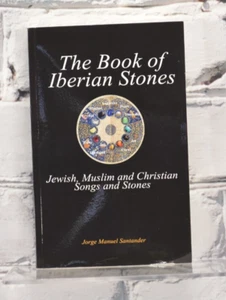
The Book of Iberian Stones Jewish Muslim and Christian Songs an

US $14.95
ApproximatelyS$ 19.38
Condition:
“New!!!! Item may have minor shelf damage. Otherwise new and unused. See pictures for condition”
Oops! Looks like we're having trouble connecting to our server.
Refresh your browser window to try again.
Shipping:
US $4.95 (approx S$ 6.42) Economy Shipping.
Located in: Mahomet, Illinois, United States
Delivery:
Estimated between Wed, 10 Dec and Mon, 15 Dec to 94104
Returns:
30 days return. Seller pays for return shipping.
Coverage:
Read item description or contact seller for details. See all detailsSee all details on coverage
(Not eligible for eBay purchase protection programmes)
About this item
Seller assumes all responsibility for this listing.
eBay item number:195555997237
Item specifics
- Condition
- Good
- Seller Notes
- “New!!!! Item may have minor shelf damage. Otherwise new and unused. See pictures for condition”
- ISBN
- 9781548182922
About this product
Product Identifiers
Publisher
CreateSpace
ISBN-10
1548182923
ISBN-13
9781548182922
eBay Product ID (ePID)
247506085
Product Key Features
Book Title
Book of Iberian Stones : Jewish, Muslim and Christian Songs and Stones
Number of Pages
360 Pages
Language
English
Publication Year
2017
Topic
Europe / Spain & Portugal
Genre
History
Format
Trade Paperback
Dimensions
Item Height
0.9 in
Item Weight
18.9 Oz
Item Length
8.5 in
Item Width
5.5 in
Additional Product Features
Intended Audience
Trade
TitleLeading
The
Synopsis
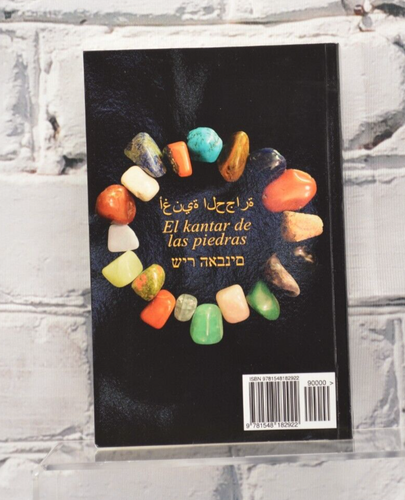
This book aims to show the symbolism of precious stones in Jewish, Christian and Muslim Iberian (Spain and Portugal) texts. The fact that texts from different religious backgrounds shared certain commonalities in regard to the symbolism of stones deepens our understanding of the interactions among the Muslims, Jews and Christians communities of medieval Iberia. It is part of a type of 'cultural convivencia' (peaceful coexistence) in which the ideas, desires and fears reflected in these stones do not represent a specific religion but rather a frontier space between different religions and cultures.The three religions are represented mainly through the analysis of three medieval Iberian works: Ibn Hazm' Ring of The Dove (Muslim); the lapidary of the king Alfonso the X and the Libro de Buen Amor (Christian); various medieval songs (romances) composed in Ladino or Judeo-Spanish (Judaism). The symbolism carried by these stones takes us through a border-like path that represents the border-like situation of Spain at the time.Furthurmore and in order to broaden our understanding of the symbolism of these gems, I have added some references to these stones in Tirant lo Blanc by Joanot Martorell (1490), the Celestina by Fernando de Rojas (1499) and Miguel de Cervantes' famous work El Ingenioso Hidalgo Don Quijote de la Mancha (1605-1615).The second part of this book contains a translation of the Lapidary of Alphonse the tenth, king of Castile. It aims to show the desires and fears of common people during the Middle Ages in Iberia. This lapidary contains brief entries that explain the virtues and descriptions of each stone. These virtues are not exclusively orientated towards rich or noblemen, instead they contain everyday fears and desires of common people. For instance a stone that brings happiness, that works as a aphrodisiac, that can make one fake pregnancy, that forces one to be celibate, that prevents one from drowning, makes one lose weight or fear and stones that grants the ability to drink without getting drunk.Chapters:1. Unnamed Precious Stones2. Crystals 3. Pearls and Aljófares4. Corals and Jets5. Diamonds and Emerald6. Rubies and Sapphires7. The Magnet8. Symbolism Chart9. Googling in the Middle Ages: What did normal people want?10. Lapidary of Alfonso X, King of Castile (translation), This book aims to show the symbolism of precious stones in Jewish, Christian and Muslim Iberian (Spain and Portugal) texts. The fact that texts from different religious backgrounds shared certain commonalities in regard to the symbolism of stones deepens our understanding of the interactions among the Muslims, Jews and Christians communities of medieval Iberia. It is part of a type of 'cultural convivencia' (peaceful coexistence) in which the ideas, desires and fears reflected in these stones do not represent a specific religion but rather a frontier space between different religions and cultures. The three religions are represented mainly through the analysis of three medieval Iberian works: Ibn Hazm' Ring of The Dove (Muslim); the lapidary of the king Alfonso the X and the Libro de Buen Amor (Christian); various medieval songs (romances) composed in Ladino or Judeo-Spanish (Judaism). The symbolism carried by these stones takes us through a border-like path that represents the border-like situation of Spain at the time. Furthurmore and in order to broaden our understanding of the symbolism of these gems, I have added some references to these stones in Tirant lo Blanc by Joanot Martorell (1490), the Celestina by Fernando de Rojas (1499) and Miguel de Cervantes' famous work El Ingenioso Hidalgo Don Quijote de la Mancha (1605-1615). The second part of this book contains a translation of the Lapidary of Alphonse the tenth, king of Castile. It aims to show the desires and fears of common people during the Middle Ages in Iberia. This lapidary contains brief entries that explain the virtues and descriptions of each stone. These virtues are not exclusively orientated towards rich or noblemen, instead they contain everyday fears and desires of common people. For instance a stone that brings happiness, that works as a aphrodisiac, that can make one fake pregnancy, that forces one to be celibate, that prevents one from drowning, makes one lose weight or fear and stones that grants the ability to drink without getting drunk. Chapters: 1. Unnamed Precious Stones 2. Crystals 3. Pearls and Alj fares 4. Corals and Jets 5. Diamonds and Emerald 6. Rubies and Sapphires 7. The Magnet 8. Symbolism Chart 9. Googling in the Middle Ages: What did normal people want? 10. Lapidary of Alfonso X, King of Castile (translation)
Item description from the seller

Popular categories from this store
Seller feedback (1,044)
- f***k (1070)- Feedback left by buyer.Past yearVerified purchasefast professional service. item exactly as described, if not just a bit better. good communication and fast delivery. I have never had a soft paperback volume packaged with more care and professionalism. I have bought rarer volumes for ten times the purchase price that have been mailed out without a tenth of the care. Obviously, I would highly recommend this excellent eBay seller and look forward to doing additional business.Fields of Vision The Photography of John Vachon by John Vachon (2010,... (#194432948034)
- 2***m (406)- Feedback left by buyer.Past 6 monthsVerified purchaseCream arrived quickly and securely packaged. Exactly as described in the listing. Excellent eBay seller would highly recommend and look forward to shopping with them again.
- c***e (135)- Feedback left by buyer.Past monthVerified purchaseNew in box, exactly as described. Great price and fast shipping!! Well packaged. Would purchase from again.
Popular categories from this store
Seller feedback (1,044)
- f***k (1070)- Feedback left by buyer.Past yearVerified purchasefast professional service. item exactly as described, if not just a bit better. good communication and fast delivery. I have never had a soft paperback volume packaged with more care and professionalism. I have bought rarer volumes for ten times the purchase price that have been mailed out without a tenth of the care. Obviously, I would highly recommend this excellent eBay seller and look forward to doing additional business.Fields of Vision The Photography of John Vachon by John Vachon (2010,... (#194432948034)
- 2***m (406)- Feedback left by buyer.Past 6 monthsVerified purchaseCream arrived quickly and securely packaged. Exactly as described in the listing. Excellent eBay seller would highly recommend and look forward to shopping with them again.
- c***e (135)- Feedback left by buyer.Past monthVerified purchaseNew in box, exactly as described. Great price and fast shipping!! Well packaged. Would purchase from again.